

Contact
Privacy
Legal Notice - Impressum
Career
News


Catella is a pan-European real estate investment management firm, listed on NASDAQ, with 16 billion euros in assets under management and offices in 25 cities across 12 countries. Its two core business areas - property investments and fund management, and corporate finance - depend on a shared, accurate view of client relationships across a highly distributed operation.
Four decades of growth through mergers and acquisitions left Catella with 8 separate CRM systems: MS Dynamics, Zoho, Monday.com, homegrown tools, XL sheets, and two distinct Salesforce instances, operating across 9 languages and 15 different business processes. Catella initiated a strategic program to centralize its CRM on Salesforce and selected conemis transition cloud (ctc) to manage and execute the migration.
Catella's consolidation involved over 300TB of structured and unstructured data, 9 languages, 15 distinct business processes, and active operations across 12 countries. Each of the 8 legacy systems carried its own data model, transformation logic, and business rules. Complex legacy data structures, strict data quality requirements, and tight timelines with no tolerance for operational disruption defined the project from the outset. Traditional migration approaches introduced unacceptable risk across all three dimensions: data consistency, manual effort, and delivery timelines.

Director, Technology at
Catella
"I have been working with the Salesforce ecosystem for the past 10 years and in Enterprise Architecture for all my career. I have never been as impressed with a tool or a team as I am with conemis. While we used the solution for Salesforce to Salesforce migration, the architecture of the tool is so scalable that it can be used for almost any complex data migration. I only wish I had found conemis earlier."
The project closed with 0 errors on go-live and 100% data accountability, validated through iterative testing and reconciliation cycles prior to production cutover. Migration cost was reduced by 70%. Time to market was cut by 30%. Catella's team has already indicated plans to apply ctc to a broader enterprise data migration program, a direct extension of the same platform and methodology.

Catella has selected conemis to manage every stage of the migration. The approach ran across 4 structured phases: assessment and legacy system mapping, data cleansing and automated transformation, controlled migration runs with full transparency, and iterative validation cycles through to go-live. Centralized monitoring gave Catella complete auditability at every stage. A repeatable migration framework meant each cycle built on the last, reducing execution time as the project progressed.
Automated extraction, transformation, and loading across all 8 legacy systems, with no manual file handling and no Excel dependencies. Structured mapping from each legacy data model to Salesforce covered all objects, relationship fields, and conversion logic. The result was a scalable migration framework Catella can carry forward into its next program without rebuilding from scratch.
-Photoroom.png)
"The best part about conemis, apart from the tool, is the team that comes with it. The team knows Salesforce better than most technical leaders at Salesforce. On top of that, they are very passionate about their offering and go the extra mile to support the customer."
For organizations managing similar complexity, fragmented CRM landscapes, high data volumes, multilingual operations, or M&A-driven consolidation; Catella's experience demonstrates what becomes possible when the right methodology and the right tooling work together.

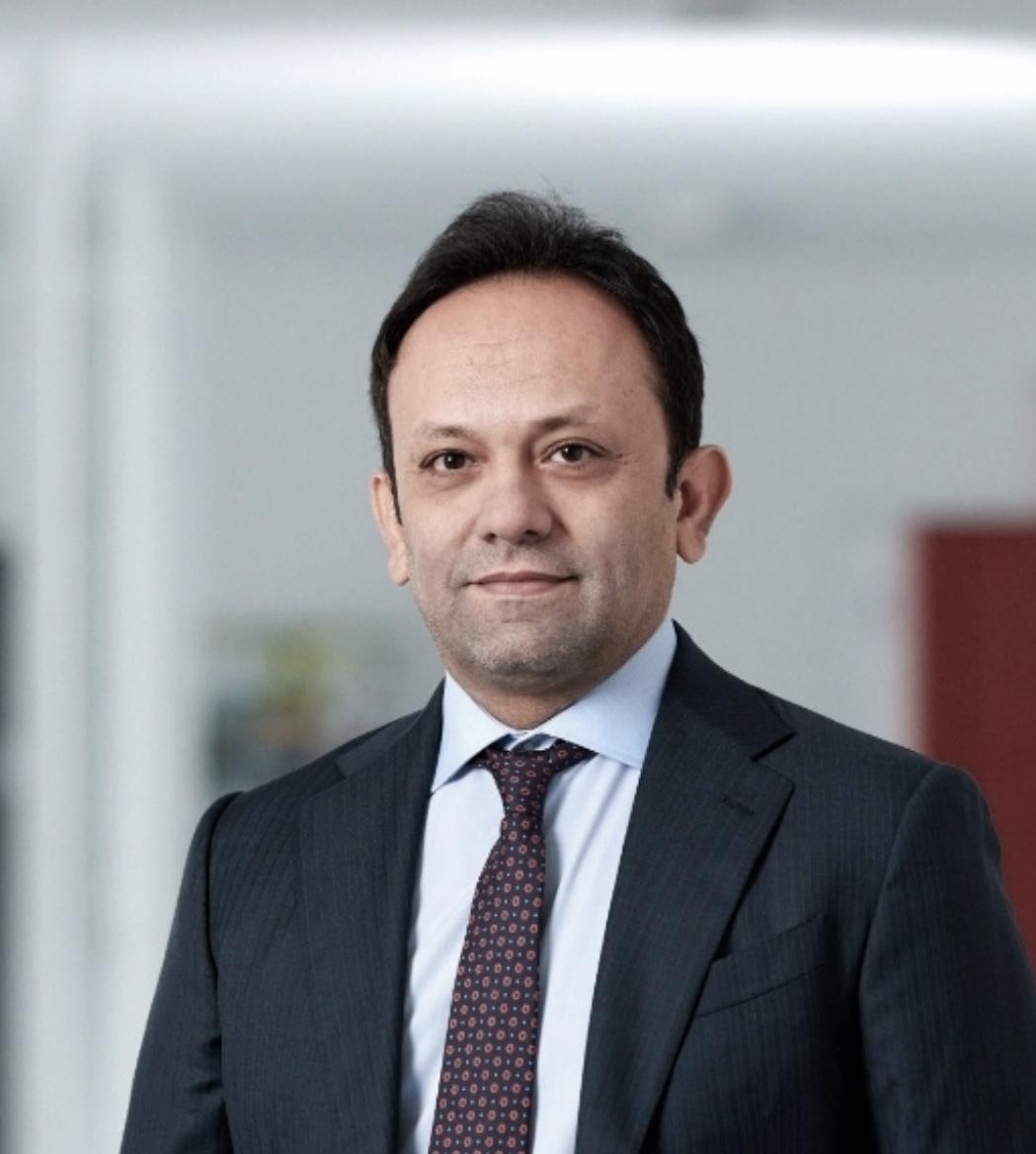
Managing Director of conemis
"It was a pleasure collaborating with experts like Abhinandan Singh on this migration, professionals who truly understand the importance of automation and structured methodology in complex migration projects.
The successful Catella migration, with high customer satisfaction, is a strong testament to this and makes me proud of our product and SME teams."
Catella's consolidation demonstrates what becomes possible when migration is treated as a structured program rather than a one-time event. Eight legacy systems, 12 countries, 300TB of data, and 0 errors on go-live is not an outcome that happens by chance. It is the result of methodology, automation, and a repeatable framework designed to carry forward.
For other financial services firms navigating M&A-driven CRM fragmentation, Catella's experience offers a direct proof point: the complexity is manageable when the tooling is purpose-built for it.
Data journeys aren't just about migrating data, it's about building the foundation every future initiative depends on.